
22/01/2026
4 min read
Why Tooth Sensitivity Happens and How to Reduce It Safely
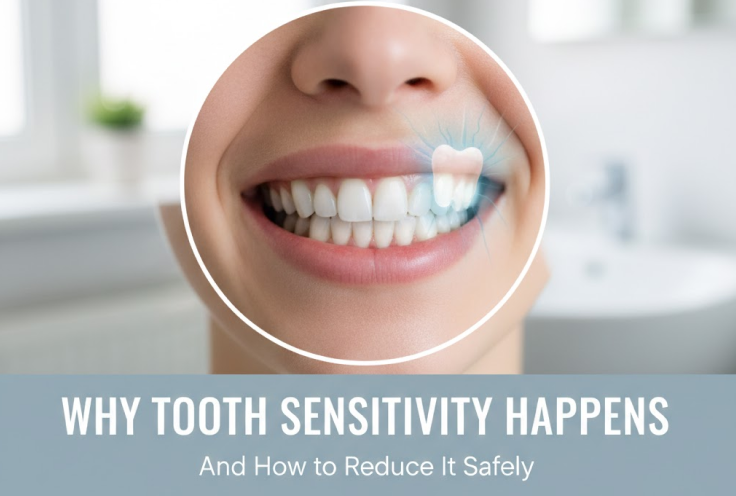
A sudden sharp pain when you drink something cold or hot can be uncomfortable and confusing. Many people experience tooth sensitivity at some point and wonder whether it is serious or temporary. Tooth sensitivity is common, and in most cases, it can be managed safely once the underlying cause is understood.
Symptoms and Causes of Tooth Sensitivity
Tooth sensitivity usually occurs when the protective layers of the tooth are weakened or exposed. It can affect one tooth or several teeth at the same time.
Common Symptoms of Tooth Sensitivity
- Sharp pain when eating or drinking hot, cold, sweet, or acidic foods
- Discomfort while brushing or flossing
- Sudden sensitivity that goes away quickly
- Pain localized to one tooth or a specific area
Common Causes Behind Tooth Sensitivity
1. Enamel Wear
Enamel is the hard outer layer of the tooth that protects the inner structure. When enamel wears down, the dentin (the softer layer beneath enamel) becomes exposed, leading to sensitivity.
Simple meaning: Dentin is the sensitive inner layer of the tooth.
2. Gum Recession
When gums pull back from the teeth, the tooth roots become exposed. Tooth roots do not have enamel, making them more sensitive to temperature and touch.
3. Overbrushing or Hard Toothbrush Use
Brushing too aggressively or using a hard-bristled toothbrush can gradually damage enamel and irritate gums, increasing sensitivity.
4. Tooth Decay or Cavities
Cavities create openings in the tooth structure, allowing external stimuli to reach sensitive areas inside the tooth.
5. Cracked or Chipped Teeth
Small cracks may not be visible but can expose sensitive parts of the tooth, causing discomfort.
6. Recent Dental Procedures
Temporary sensitivity may occur after dental treatments such as whitening, fillings, or scaling. This usually improves within a short time.
7. Acidic Foods and Drinks
Frequent consumption of acidic foods and beverages can slowly erode enamel, making teeth more sensitive.
8. Teeth Grinding (Bruxism)
Grinding or clenching teeth, often during sleep, can wear down enamel over time and lead to sensitivity.
Simple meaning: Bruxism = grinding or clenching teeth, usually unconsciously.
Safe Care and Practical Tips to Reduce Tooth Sensitivity
Managing tooth sensitivity often involves a combination of proper oral care, lifestyle changes, and professional guidance.
Daily Oral Care Tips
- Use a soft-bristled toothbrush
- Brush gently using circular motions
- Choose toothpaste designed for sensitive teeth
- Avoid brushing immediately after consuming acidic foods
- Floss daily to remove plaque between teeth
Dietary and Lifestyle Adjustments
- Limit very hot, cold, and acidic foods
- Reduce sugary snacks and carbonated drinks
- Drink water after consuming acidic beverages
- Avoid chewing ice or hard objects
- Manage stress to reduce teeth grinding
Home Awareness (Not Medical Treatment)
- Sensitivity toothpaste may help reduce discomfort over time
- Consistency is important, results are not immediate
- Avoid home remedies that promise instant results
Important note: Home care helps manage symptoms but does not replace professional diagnosis.
Professional Dental Treatment Options
If sensitivity persists, a dentist may recommend professional treatments based on the cause.
Possible Dental Solutions
- Fluoride treatment to strengthen enamel
- Dental bonding to cover exposed root surfaces
- Treatment for cavities or cracked teeth
- Night guards for teeth grinding
- Gum treatment if gum recession is present
The right approach depends on individual oral health and should always be determined by a dental professional.
When Should You See a Dentist?
Tooth sensitivity should not be ignored if it becomes frequent or severe.
Red Flags That Need Dental Evaluation
- Sensitivity lasting more than a few weeks
- Pain that worsens over time
- Sensitivity limited to one specific tooth
- Sensitivity accompanied by swelling or gum bleeding
- Discomfort that interferes with eating or daily activities
Early evaluation helps prevent minor issues from becoming complex problems.
Summary and Positive Takeaway
Tooth sensitivity is common and often manageable with proper care and awareness. In many cases, simple changes in brushing habits and diet can reduce discomfort. When sensitivity persists, professional dental care helps identify the cause and provide safe, effective solutions.
Sensitive teeth do not mean weak teeth. With the right approach, comfort and confidence can be restored.
If tooth sensitivity is affecting your daily comfort, a professional dental check-up can help identify the cause and guide safe treatment. Book an appointment at Dentex today or call 01868-980020 for expert dental care and guidance.
References
American Dental Association (ADA) – Tooth Sensitivity
Mayo Clinic – Tooth Sensitivity Causes and Treatment
National Institute of Dental and Craniofacial Research (NIDCR) – Sensitive Teeth