
General Dentistry
5 Min

Team Dentex
25/02/2026
For many people, wisdom teeth appear without causing any issues. However, for others, they can lead to pain, swelling, infection, and damage to nearby teeth. If you've been experiencing discomfort at the back of your mouth, you may be wondering whether your wisdom teeth are the cause.
Wisdom teeth problems are among the most common reasons young adults visit the dentist. While not every wisdom tooth needs to be removed, some can become impacted, infected, or difficult to clean, increasing the risk of long-term oral health complications.
In this guide, we'll explain why wisdom teeth often cause problems, the symptoms to watch for, available treatment options, and when wisdom tooth removal may be recommended.
Wisdom teeth are the third and final set of molars. They usually emerge between the ages of 17 and 25 and are located at the very back of the mouth.
Most people develop four wisdom teeth, although some may have fewer or none at all. When there isn't enough space in the jaw, these teeth may not erupt properly, increasing the likelihood of dental problems.
Unlike other permanent teeth, wisdom teeth often erupt after the jaw has fully developed. As a result, there may not be enough room for them to grow normally.
Common reasons wisdom teeth problems occur include:
Lack of space in the jaw
Partial eruption through the gums
Growing at an angle
Remaining trapped beneath the gums or jawbone
Difficulty cleaning the back of the mouth
These conditions increase the risk of infection, tooth decay, and damage to neighboring teeth.
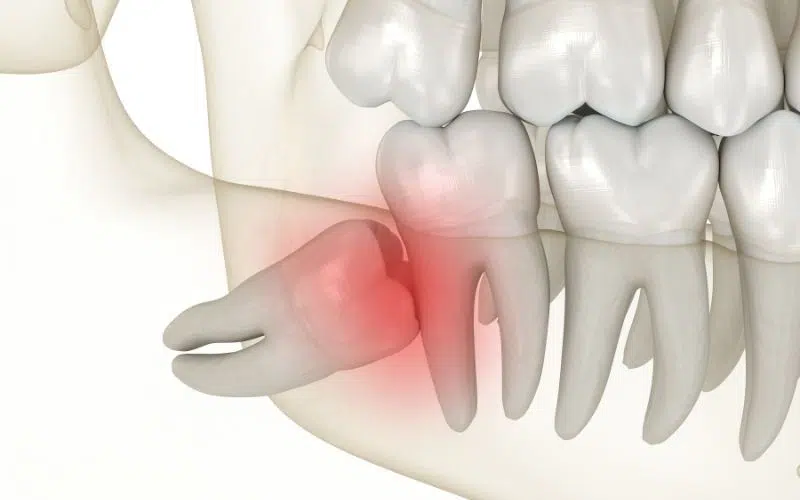
Impacted wisdom teeth are teeth that cannot fully erupt because they are blocked by bone, gum tissue, or adjacent teeth.
There are several types of impaction:
Fully impacted (completely beneath the gums)
Partially impacted (partially visible)
Horizontally impacted (growing sideways)
Angled toward the neighboring tooth
An impacted wisdom tooth may remain symptom-free for years or suddenly begin causing pain and infection.
Not everyone experiences symptoms immediately. However, common wisdom teeth symptoms include:
Pain at the back of the mouth
Swollen or tender gums
Jaw pain or stiffness
Difficulty opening the mouth fully
Pain while chewing
Bad breath or unpleasant taste
Swelling around the jaw
Red or bleeding gums
Food getting trapped around the wisdom tooth
Persistent wisdom tooth pain should always be evaluated by a dentist.
A partially erupted wisdom tooth creates an ideal environment for bacteria to grow.
Common symptoms of a wisdom tooth infection include:
Severe pain
Swollen gums
Pus around the tooth
Persistent bad breath
Difficulty swallowing
Fever
Swollen lymph nodes
An untreated infection can spread to surrounding tissues and should be treated promptly.
Ignoring problematic wisdom teeth may lead to several oral health issues.
Some common wisdom teeth complications include:
Because wisdom teeth are difficult to clean, plaque and bacteria can easily accumulate, increasing the risk of cavities.
Food particles trapped around partially erupted teeth may cause gum inflammation and infection.
An impacted wisdom tooth may press against the neighboring molar, leading to pain, decay, or damage.
In rare cases, fluid-filled cysts may develop around impacted wisdom teeth, potentially damaging bone and surrounding teeth.
Improperly positioned wisdom teeth may contribute to discomfort during chewing and affect overall bite alignment.
Many people ask when to remove wisdom teeth.
Removal may be recommended if the tooth:
Causes persistent pain
Becomes infected repeatedly
Is impacted
Damages neighboring teeth
Develops decay that cannot be treated easily
Contributes to gum disease
Forms a cyst
Interferes with orthodontic treatment
Not every wisdom tooth requires extraction. If the tooth erupts normally, functions well, and can be cleaned properly, your dentist may recommend regular monitoring instead.
If extraction is necessary, your dentist will first examine your mouth and usually take dental X-rays to determine the position of the tooth.
A typical wisdom tooth extraction involves:
Administering local anesthesia or other appropriate sedation.
Gently loosening the tooth.
Removing the tooth, sometimes in sections if impacted.
Cleaning the extraction site.
Placing stitches if required.
The procedure is routinely performed and is generally safe when carried out by an experienced dental professional.
Recovery usually takes several days, although complete healing of the extraction site may take longer.
To support healing:
Bite gently on the gauze provided.
Take medications exactly as prescribed.
Apply an ice pack during the first 24 hours if advised.
Eat soft foods for a few days.
Avoid smoking and alcohol.
Do not drink through a straw during the initial healing period.
Keep the area clean according to your dentist's instructions.
Following post-operative instructions helps reduce the risk of complications such as dry socket or infection.
You cannot prevent wisdom teeth from developing, but you can reduce complications through early monitoring.
Helpful steps include:
Regular dental check-ups
Routine dental X-rays when recommended
Good oral hygiene
Cleaning around partially erupted teeth carefully
Seeking treatment when pain or swelling develops
Early evaluation allows your dentist to detect problems before they become more serious.
No. Wisdom teeth that erupt normally, remain healthy, and can be cleaned effectively may not require removal.
A dental examination and X-ray are the best ways to determine whether a wisdom tooth is impacted.
The procedure is performed under appropriate anesthesia, so you should not feel pain during the extraction. Mild discomfort afterward is normal and can usually be managed with prescribed medication.
While symptoms may temporarily improve, the underlying infection often remains. Professional evaluation is recommended to prevent complications.
You should seek dental care if pain lasts more than a day or two, swelling develops, you have difficulty opening your mouth, or you notice signs of infection.
Wisdom teeth do not always cause problems, but when they do, early diagnosis is essential. Pain, swelling, infection, and impacted teeth should never be ignored, as delaying treatment can increase the risk of more serious complications.
Regular dental examinations and timely treatment can help protect your oral health and prevent unnecessary discomfort. Whether your wisdom teeth require monitoring or removal, a professional evaluation is the best way to determine the right course of action.
If you're experiencing wisdom tooth pain, swelling, or other symptoms, don't wait for the problem to become more serious. At DENTEX, our experienced dental professionals can evaluate your wisdom teeth using modern diagnostic techniques and recommend the most appropriate treatment for your individual needs.
Whether you need monitoring, infection management, or wisdom tooth removal, we're committed to providing safe, comfortable, and personalized dental care.
Book your appointment with DENTEX today and let our expert team help you protect your oral health with timely wisdom tooth treatment.
Wisdom teeth are the last permanent molars to develop and typically appear between the ages of 17 and 25. Because there is often limited space in the jaw, these teeth may become impacted, partially erupt, or grow at an angle, leading to pain, swelling, infection, gum disease, and damage to neighboring teeth. Common symptoms include jaw pain, swollen gums, difficulty chewing, bad breath, and food trapping around the affected tooth. While not every wisdom tooth requires removal, extraction is often recommended when the tooth causes persistent pain, repeated infections, tooth decay, cyst formation, or damage to nearby teeth. Diagnosis usually involves a clinical examination and dental X-rays, allowing the dentist to determine the most appropriate treatment. Following proper aftercare after wisdom tooth extraction helps promote healing and reduces the risk of complications. Regular dental check-ups and early evaluation remain the most effective ways to identify wisdom teeth problems before they become severe. If you're experiencing discomfort at the back of your mouth, consulting the experienced dental team at DENTEX can help you receive an accurate diagnosis and personalized treatment plan to protect your long-term oral health.